Live Underwater Webcams: Sources, Schedules and How to Verify Feeds
Live underwater cameras do exist, but availability varies by provider and many research feeds run only during scheduled windows. Examples include reef and seafloor projects operated by research institutions and public-interest organizations; the original provider page is the authoritative place to confirm whether a feed is currently live.
TL;DR:
- Most reliable underwater webcams are hosted by research institutions that publish schedule notes, avoiding dead links common with general directories.
- Coastal and harbor cameras typically stream continuously due to shore power, whereas deep-sea and research cameras often operate on scheduled windows because of bandwidth and power constraints.
- Watching high-quality streams is easiest over Wi-Fi using VLC or native HLS players with M3U8 links, and verifying source information ensures the footage is current and authentic.
- Deep-sea and research cameras face technical challenges like biofouling, limited bandwidth, and maintenance needs, which cause them to have scheduled or intermittent streams.
- Public streams like Coral City and Ocean Networks Canada serve both audience engagement and scientific research, providing long-term ecological data and ecosystem monitoring.
GlobeWebcamsExplore Webcams WorldwideUse GlobeWebcams’ interactive map for public webcam discovery; the underwater research feeds discussed in this article are verified at their original provider pages.Explore the interactive map
Table of Contents
- Where to find live underwater streams
- Types of underwater cams and when they actually stream
- How to watch: devices, formats, and quick fixes
- Notable live projects worth knowing
- Privacy and ethics beneath the surface
- The technical hurdles behind a working feed
- Why these cameras matter beyond entertainment
- Sources
- FAQ
Where to find live underwater streams
The fastest route to a working feed is a directory that organizes cameras by place and category instead of a general search that turns up dead links. GlobeWebcams’ worldwide map can help with geographic webcam discovery, while specialized underwater research feeds are best confirmed on the original institution’s project page.
Institutional project pages tend to be the most dependable source for anything below the surface. Groups like the Ocean Observatories Initiative and Ocean Networks Canada host or directly link to their own streams, and they publish schedule notes that explain when a camera is actually recording. Aquarium websites follow the same pattern: the exhibit page usually embeds the live player and states whether the feed runs continuously or only during opening hours.
YouTube and other embedded players complicate verification a little, since a channel can rebroadcast someone else’s feed without saying so. Before trusting a stream, check the channel description for the original provider’s name, a timestamp, or a link back to the source project.
A short verification checklist helps before you rely on any feed:
- Confirm the page names the original provider and links to their site or instrument page.
- Look for a timestamp or “last updated” note near the video player.
- For technical feeds, check whether an M3U8 playlist link is provided, which can be opened directly in VLC or a mobile HLS player.
- Avoid any page that calls a camera “live” without showing when it last refreshed.
Types of underwater cams and when they actually stream
Not every underwater camera runs the same way and knowing the type tells you what to expect before you click play.
- Coastal and harbor cams typically sit just below or at the waterline and often run continuously, since they rely on shore power and stable connectivity.
- Aquarium exhibit cams usually stream during facility hours and may go dark overnight or during tank maintenance.
- Nearshore reef cams, like urban reef installations, often run around the clock because they use simpler, shallow-water equipment.
- Seafloor and research cams are the most likely to run on a fixed schedule rather than continuously, since they depend on remote power and bandwidth budgets.
- Deep-sea vent cams are the most restricted, streaming only in short scheduled windows tied to instrument duty cycles.
The Ocean Observatories Initiative’s Axial Seamount camera usually streams in scheduled bursts rather than continuously, a pattern driven by the bandwidth and power limits of deep-sea instruments. Reading a provider’s schedule notes before you tune in saves you from staring at a blank frame.
How to watch: devices, formats, and quick fixes
Most underwater streams reach you through one of three formats: a YouTube embed, a direct video file, or an HLS/M3U8 playlist meant for a dedicated player. Research-grade feeds from projects like OOI often publish M3U8 links that open cleanly in VLC on desktop or in native HLS-compatible players on mobile.
A few habits make the viewing experience noticeably smoother:
- Connect over Wi-Fi rather than cellular data, since underwater feeds tend to be higher bitrate than typical webcam images.
- Drop the resolution setting if a stream buffers repeatedly on a phone.
- Bookmark the original provider’s page instead of a reposted version, so schedule updates and outages are reflected immediately.
- If a mobile player fails to open an M3U8 link, try the same link on a desktop browser or in VLC.
Pro Tip: When a stream looks frozen, check the provider’s own page first. A static frame is often a scheduled off-window, not a broken link.
If you’re capturing your own underwater footage rather than watching someone else’s, a phone dive case has real limits. Manufacturer guidance on depth ratings, seal checks, and restricted camera modes should guide how deep and how long you use one, since exceeding a case’s rated depth risks water intrusion regardless of the phone inside it.
Notable live projects worth knowing
A handful of projects illustrate just how different “live underwater” can look depending on location, purpose, and equipment.
- Coral City Camera streams a reef in urban Miami waters and has been viewed millions of times since it went live in late 2019, with volunteer moderators and archived screenshots supporting research into how corals persist near a dense coastline.
- OOI’s Axial Seamount camera sits on a hydrothermal chimney nearly a mile below the surface and streams in short scheduled bursts rather than continuously, a limit tied directly to instrument power and bandwidth.
- Ocean Networks Canada operates cameras across Canadian coastal and seafloor sites, many following short repeating windows rather than a nonstop feed.
That framing matters: a livestream watched by a wide public audience can double as a long-term ecological record, with daily screenshots documenting bleaching events, recovery, and species presence over months or years. Before citing any of these feeds for planning or research, check the provider’s own schedule page rather than assuming the camera is always on.
Privacy and ethics beneath the surface
Underwater cameras raise fewer personal-privacy concerns than street-level webcams, since most point at reefs, seafloor instruments, or open water rather than people. Still, cameras placed near harbors, docks, or popular dive sites can incidentally capture boats, divers, or swimmers, which raises the same consent and identifiability questions as any public camera feed.
Research and conservation projects also carry a different kind of ethical weight: publishing exact coordinates or live access to a fragile reef or a rare species aggregation site can attract unwanted boat traffic or diving pressure. Responsible providers sometimes delay footage, obscure precise locations, or limit access windows specifically to protect a site rather than to limit public interest.
There’s also a data-integrity angle. A livestream presented without a timestamp or schedule note can mislead viewers into thinking conditions are current when the footage is actually hours old or a looped recording. Reputable projects address this by publishing clear schedule and status metadata, and directories that link to them should preserve that context rather than stripping it out. For any directory listing, the underlying provider page remains the authoritative source for current stream status, schedule and rights information.
The technical hurdles behind a working feed
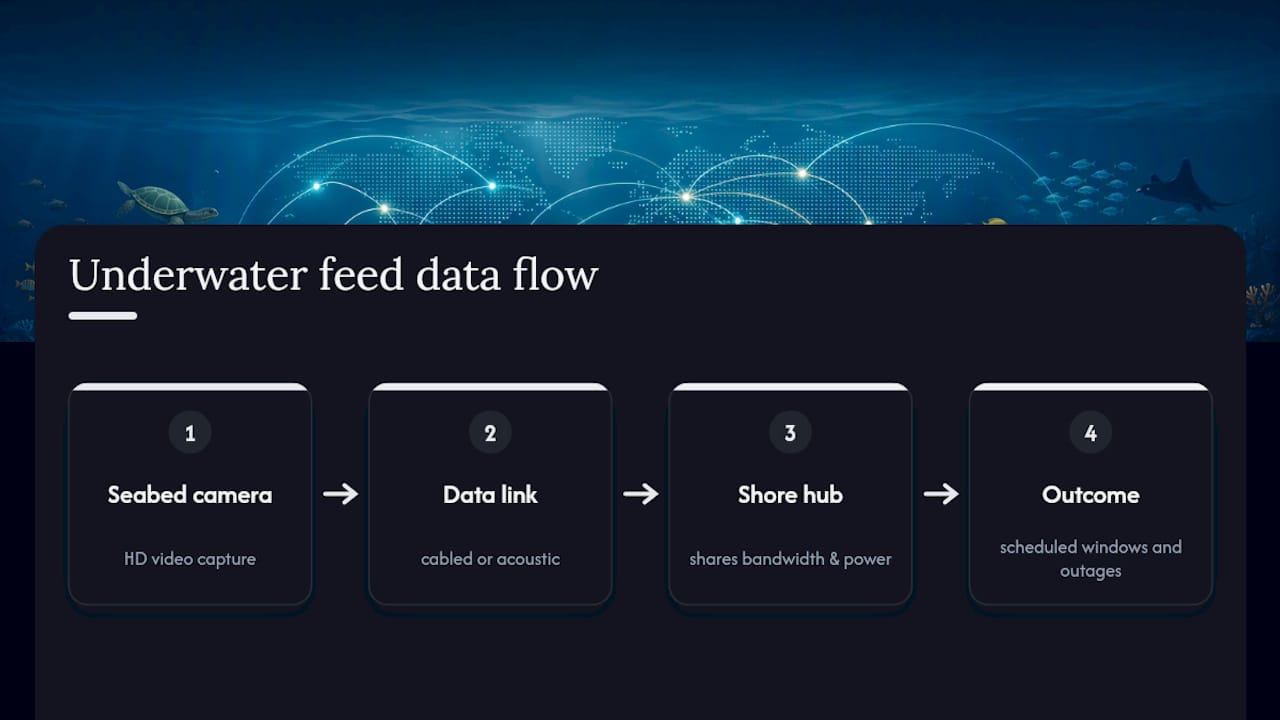
Streaming reliably from underwater is harder than running a rooftop weather cam, and the obstacles explain a lot of the scheduling patterns you’ll encounter. Saltwater is corrosive, housings need regular maintenance, and any camera below a few meters depth loses direct radio connectivity, forcing data through cabled or acoustic links back to shore.
Bandwidth is the biggest constraint for research-grade cameras. A high-definition camera at a seafloor observatory shares limited cable capacity with dozens of other instruments recording temperature, chemistry, and seismic data, which is why footage often comes in short scheduled windows instead of a constant feed. Power follows the same logic: many seafloor instruments run on a shared power budget, so a camera’s duty cycle is set to avoid starving other sensors.
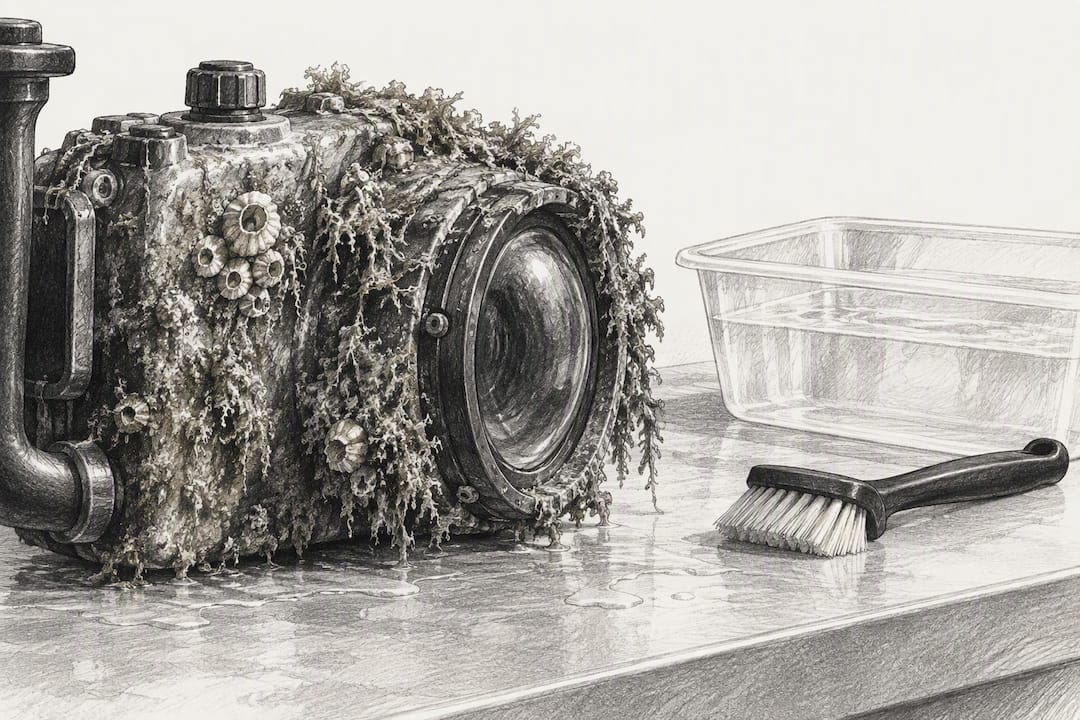
Biofouling is a more mundane but constant problem. Algae, barnacles, and sediment build up on lenses and housings within weeks in shallow, nutrient-rich water, which is one reason nearshore reef cams need more frequent cleaning than a camera parked in deep, cold water. Maintenance visits, whether by boat, dive team, or remotely operated vehicle, are scheduled around weather and vessel availability, so a camera can go offline for stretches with no warning to the public.
Why these cameras matter beyond entertainment
A live reef or seafloor feed does more than pass the time. Long-running public streams create an informal, continuous visual record that researchers can mine for patterns that would otherwise require constant in-person monitoring, from the timing of coral spawning to the arrival of a particular fish species.
The Coral City Camera shows this dual purpose clearly: it is simultaneously a public engagement tool, reframing an urban reef as something worth watching daily, and a documentation source that has supported research into how corals adapt near dense coastlines. State and federal coral programs, including Florida’s Coral Reef Conservation Program, rely on this kind of sustained observation to track reef health over time.
Deep-sea observatories serve a more specialized but equally important role. Cameras tied to projects like the Ocean Observatories Initiative give scientists and the public a rare direct look at hydrothermal vent ecosystems that would otherwise require an expensive research cruise to observe even once. That kind of access, backed by national research infrastructure, turns a niche scientific instrument into a resource anyone with an internet connection can watch.
Using webcam directories alongside original providers
General webcam directories are useful for geographic discovery, but specialist underwater feeds often live on research-institution or project pages. GlobeWebcams can be used for broader location-based discovery; for the underwater examples in this article, follow the cited original providers to confirm stream status and schedules.
Sources
- Millions watch as underwater camera documents daily life on a Miami coral reef | Utah Public Radio
- High-definition video camera | interactiveoceans (University of Washington)
FAQ
Are there any live underwater cameras?
Yes, live underwater cameras exist worldwide, ranging from continuously running reef and harbor cams to scheduled deep-sea feeds run by research institutions. Projects like the Coral City Camera and the Ocean Observatories Initiative’s seafloor cameras are among the most established examples.
Can I use my phone as an underwater camera?
Phones can capture underwater footage when placed in a rated waterproof dive case, though depth limits, seal integrity, and camera mode restrictions vary by manufacturer. Always check the case manufacturer’s depth rating and maintenance guidance before submerging a phone, since exceeding those limits risks water damage.
What are the best free live webcams?
Free live underwater webcams can include public aquarium exhibit feeds, urban reef cameras and research streams. Availability changes, so the cited original-provider pages are the best place to confirm whether a stream is currently active and free to view.
Which underwater camera is the best?
There’s no single “best” underwater webcam, since each serves a different purpose: some prioritize continuous public viewing, like reef cams, while others prioritize scientific data collection on a scheduled cycle, like deep-sea observatory cameras. The right choice depends on whether you want constant footage or a research-grade view of a specific environment.
Recommended
Webcam availability and conditions can change without notice. GlobeWebcams does not operate most listed cameras; feeds and imagery remain under the control of their original providers. Do not rely on webcam imagery alone for weather, road, travel or safety decisions.